
My mom first heard about the workshop, and brought along her mom who is visiting from the Okanagan. I brought along my daughter, so we ended up with all 4 generations of us ladies, which is already a special moment in itself. Then add to this moment some bright flowers and berries, mix it with good company (Catherine and I are old friends - although I would have to qualify that neither of us are actually old - who hadn't seen each other for a number of years), and then place this in the setting of a restored historical house on 1 1/3 acres on the upper side of scenic Deer Lake, and the result was almost magical. (Click any of the photos for a closer view.)

Here we are, all 4 generations, sporting our floral arrangements.

My daughter is fortunate to have a great-nana (now 89 years old). I hope the Lord grants me the opportunity to one day meet some of my great-grandchildren. (Although I had only 2 children myself, I already tell mine that one day I am hoping for lots of grandchildren!)

Doesn't my Nana look like a Queen with her floral crown? Very distinguished indeed.

My grandma decided to make a larger wreath, so hers became a flower necklace for the photos.

I got this photo with my daughter at home, before we hung up our wreaths to dry. The flowers were quite wet when we started our wreaths (it had been raining for a few days already), and perhaps it was a bit early in the season for the hydrangeas, so the crowns are looking pretty curled and wrinkly, but the ivy still looks fresh. I suppose one could use silica gel and dry any flowers. We'll see, but there may be some life still left in it.
For anyone inspired by these photos, the technique was actually fairly simple. We started with a length of common ivy, wrapped maybe twice around (try it on for size if you are aiming for a crown), and scotch-taped together. Then we used a spool of black sewing thread, tied and knotted to start, then wrapped around and around to secure each bunch of flowers or berries, in turn. For a fuller arrangement, you could go around twice (although we didn't). To end it, cut the thread and tie and knot (it's a bit awkward with only one end of the thread), and then separately take another piece of thread and tie and knot it again securely.
The flowers Catherine gathered included a few colours of hydrangeas, mini roses, lavender, mountain ash berries, and tansy (pretty yellow, but not sweet smelling). My mini roses are much past their prime this year, but I'm already wondering about an all-rose flower crown next season, if I can find the time.
Thanks to Catherine for an enjoyable Saturday morning, and for a great floral craft experience. We look forward to the next workshop! Here we are, with Catherine:


 Kinda spooky, she looks like she's looking at your right shoulder, considering whether she should jump up, doesn't it?
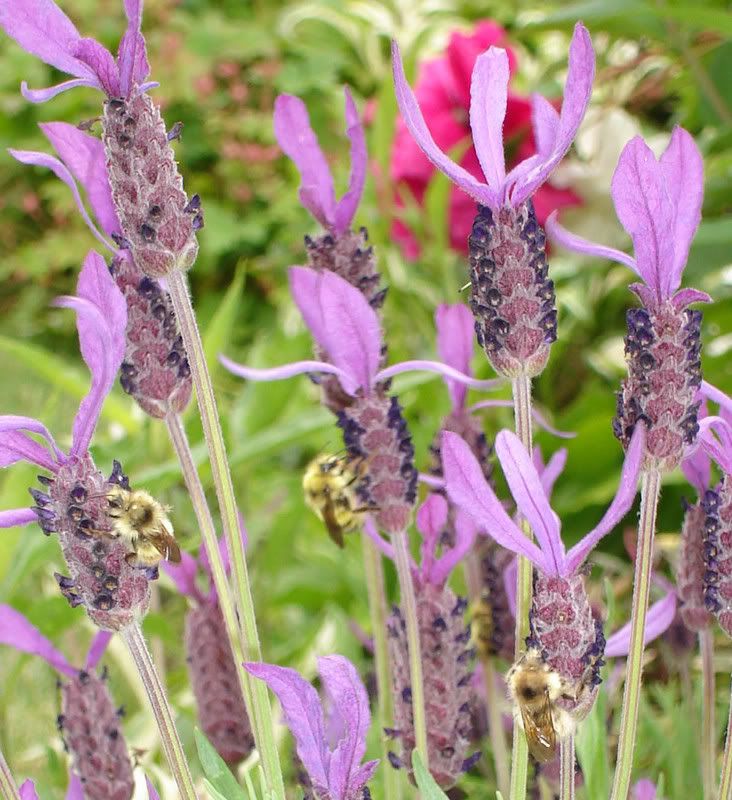

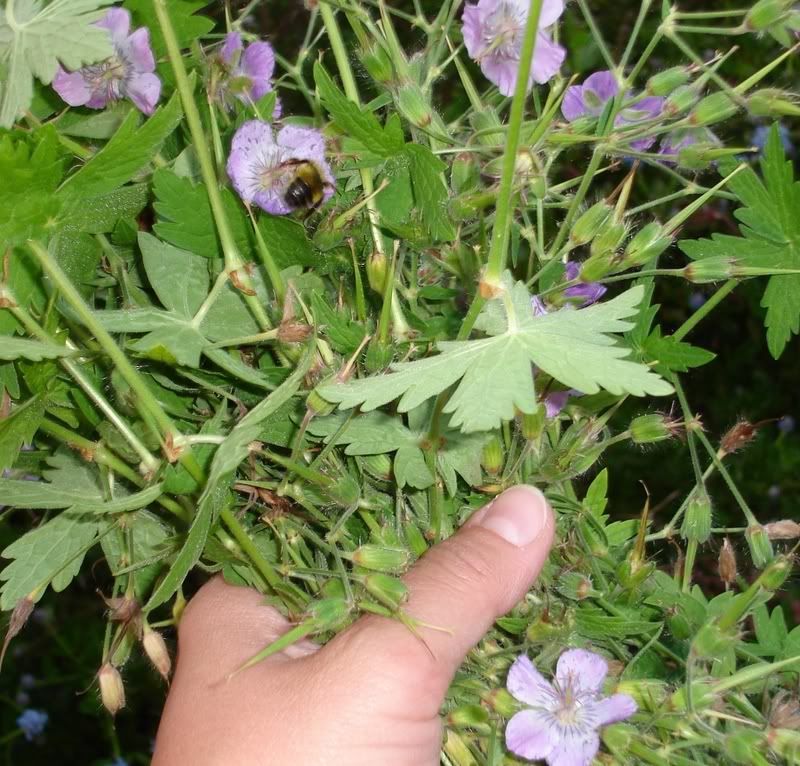
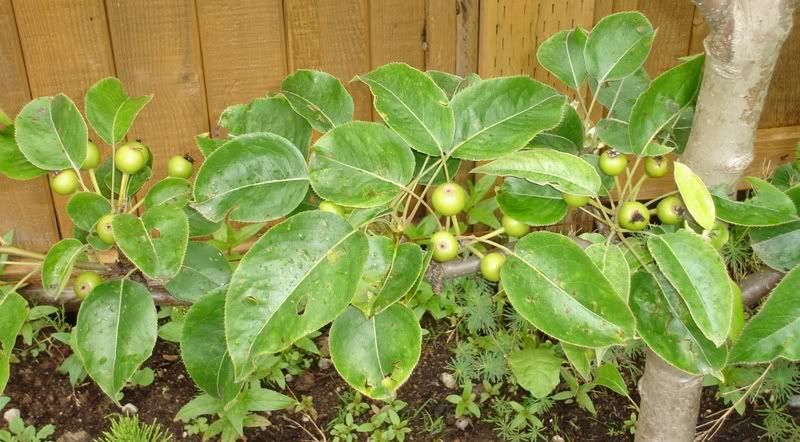
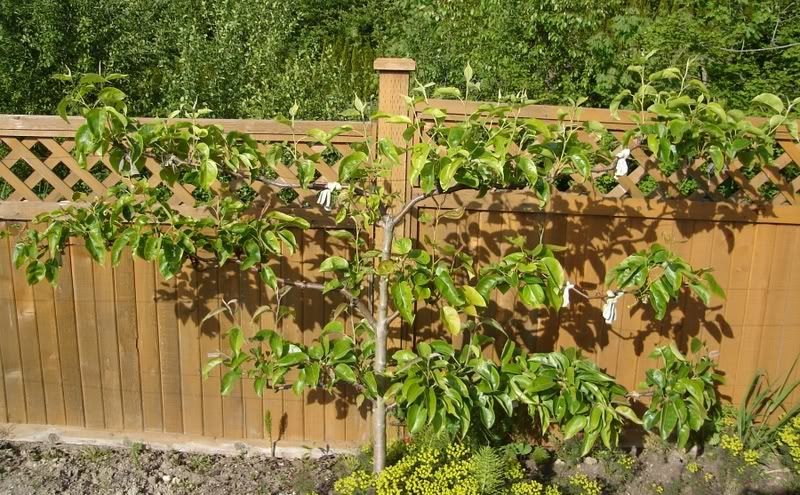
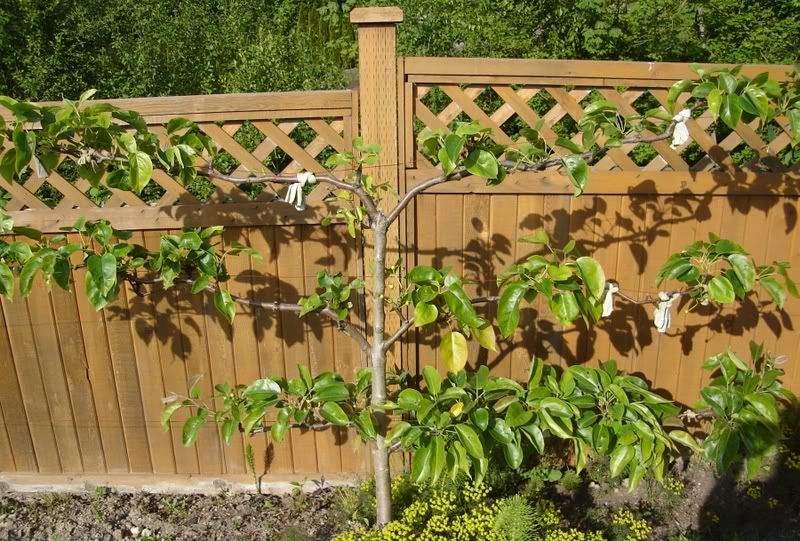
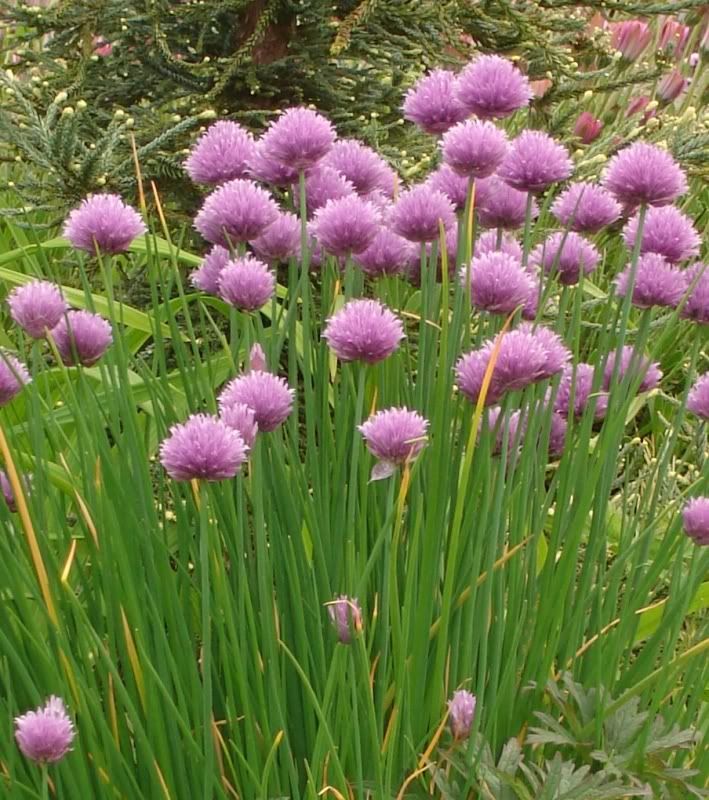 I think chives make a great ornamental, so I have a patch in my flower garden as well as my herb garden. I love to see the big bumblebees on the flowers. [Speaking of which, I was stung by a bee tonight, on the back of my neck, as I was bending to weed under the espalier trees. I heard the high-pitched buzzing (like a bee stuck in a small place), and then the sting. So I danced around, banging at my neck, and flapping my shirt, so it would fall out of my collar or armholes (sleeveless shirt). I never did see the bee, and it only hurt for maybe 20 minutes, leaving a small red spot on my neck.] So the poor bee certainly got the worst of the encounter!
 Next, the cucumbers. Two years ago, I planted a couple of seedlings at the top of my upper retaining wall, on the West side of our house, and they were a huge success, trailing down the wall and onto the grass, and bearing a crisp, sweet cucumber nearly every second day! Then last year, I tried the same thing with cukes and squashes, and was completely disappointed, they couldn't even make their way to trail over the edge of the wall, and I only got one small squash. I suspect the soil, which at that location, is a thin layer of topsoil on top of gravel and clay (backfill to the wall), had lost its nutrients. As an indicator, the hydrangea down the wall had blue flowers, whereas the others in my garden were a vibrant pink.
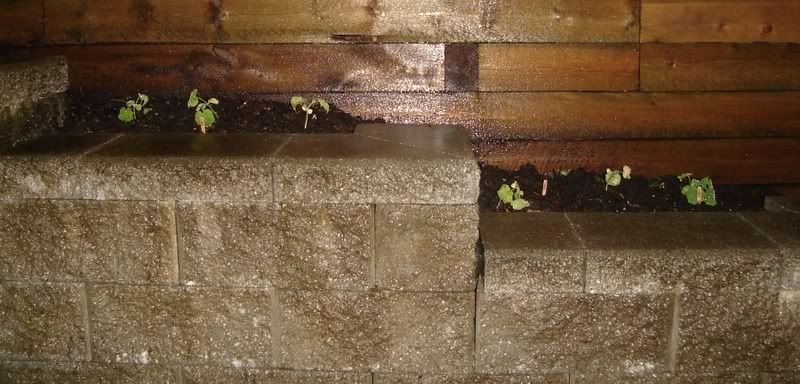 I also planted in some more seedlings of Cardoon. Last year, I planted one in the front (shady) garden, which didn't get very big, but seems to be taking off this year (although quite covered in black aphids!!).
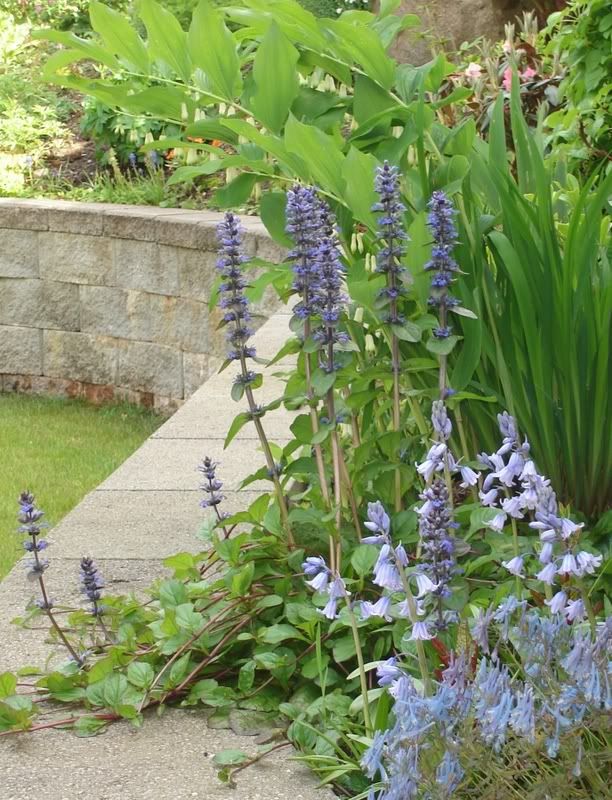 This has become a blue corner of my garden, with the blue Corydalis in front, the Hyacinthoides hispanica (Spanish bluebells), and blue Ajuga reptans (Bugleweed) behind it. Framed by the graceful arched branches of Polygonatum biflorum (Solomon's Seal), with its row of creamy white bell-shaped flowers.
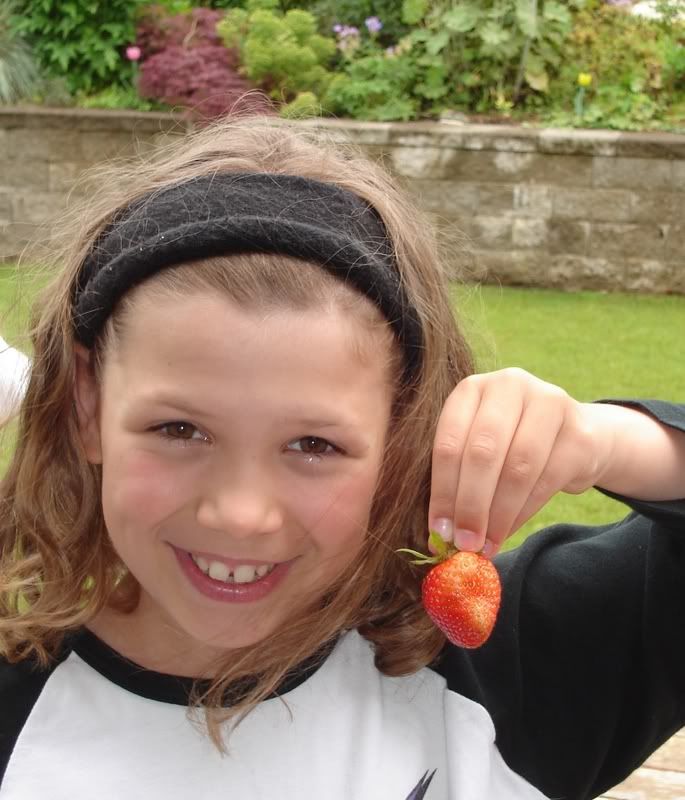
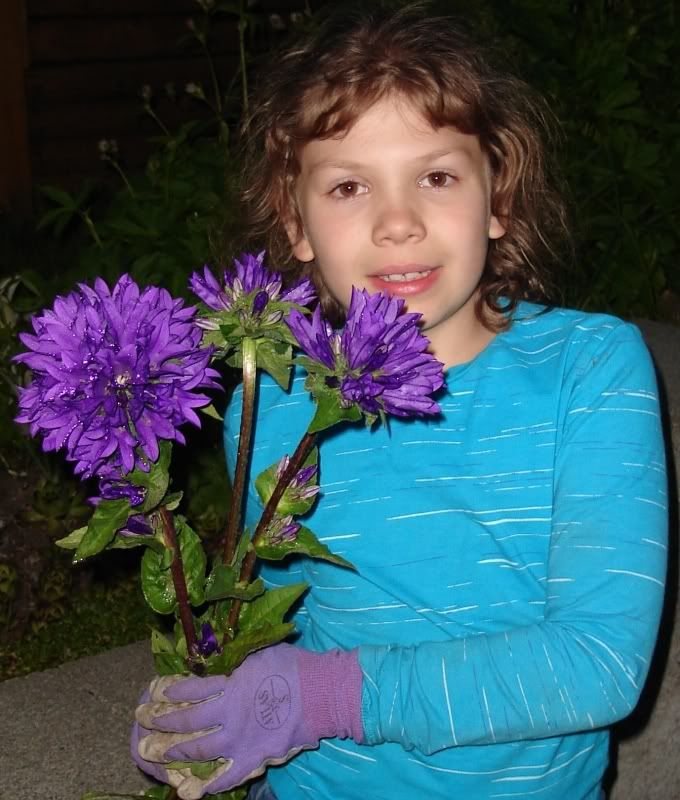
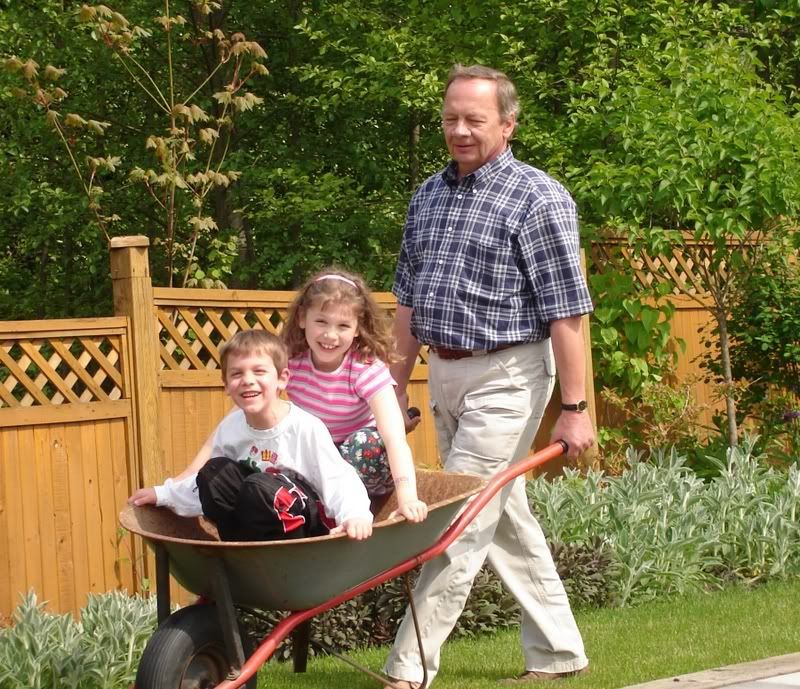 Who says gardening isn't fun for kids, too?
