Showing posts with label shrubs. Show all posts

Thursday, January 21, 2010

Bonsai Styles

I never had much interest in bonsai before, but recently (maybe with the Winter depriving me of time in the garden) I have started to toy with the idea of trying it out. So I looked at some bonsai books at the library the other night. Most of them were quite boring, and some had examples which I wouldn't consider bonsai, just little constrained trees.

Then I opened the Reader's Digest "Bonsai Secrets" by Peter Chan, and I couldn't put it down. It has some beautiful examples of bonsai, and techniques all the way from choosing the tree variety and style of pot, to the various techniques of growing, shaping, pruning, watering, and maintaining the bonsai, to the advanced techniques of creating driftwood effects ("jins" and "sharis"), grafting, and trunk thickening. I didn't know there were bonsai with berries and fruits (sadly, no photo of this) and flowers.  Pretty cool.  I was fascinated by one section which shows a juniper bought from a nursery, before (in its gallon pot) and after drastic trimming and wiring and repotting into a bonsai pot. Pretty cool, and pretty inspiring.

I really liked these 3 pages, which show different shapes of bonsai.


I'm inspired enough to want to try something.  So I dug out some Japanese maple seeds which I collected maybe 6 years ago (I hope they're still good), and have winter sown these in a plastic tray outside.  I'll need to take a look for bonsai pots (I suspect I won't want to pay the price for them, but I'll take a look at what I can get away with), and maybe look for a nursery plant (like that juniper example) which I could try my hand at radically pruning & shaping.  Also, I'll need to figure out where I'd keep such a thing.  I'm usually not much for keeping pots of any kind.

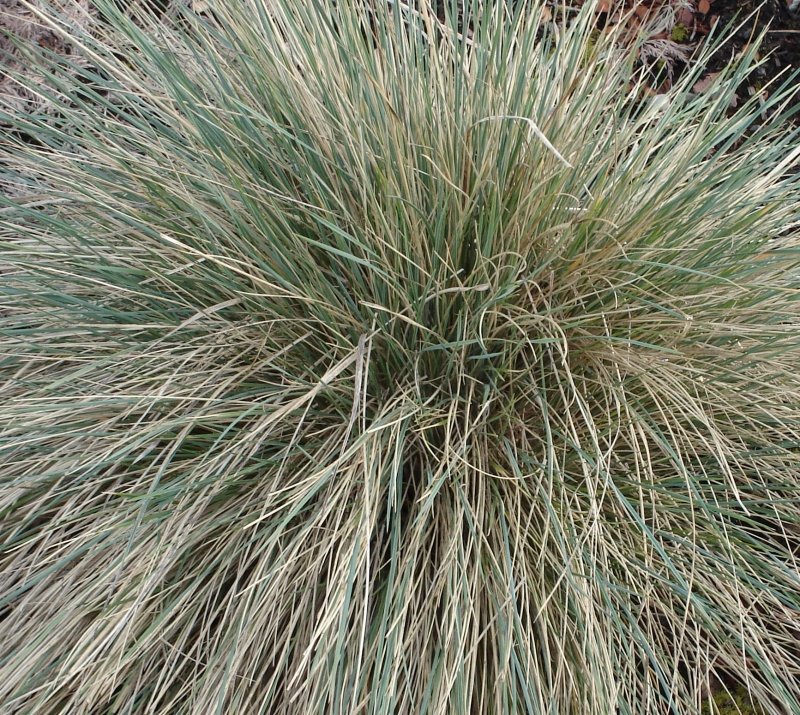
Today was a mild spring-like day, so I was able to spend a half hour or so in the front yard, cleaning up leaves and pulling old straw-like blades out of my ornamental blue oat grasses so I can see the blue-green colour again.  So pretty soon the urge to try out the bonsai will compete with my urge to lose myself in the garden.  Perhaps I can work on the bonsai after it gets dark.

Anyhow, I'd highly recommend this book, if you want to be inspired by the art of bonsai.

Wednesday, November 11, 2009

Fraser Foreshore Park

Since we were all home for Remembrance Day today, we decided to take a walk in the afternoon, between rain showers. We haven't been to Fraser Foreshore Park in Burnaby (BC) for some while, and had forgotten how peaceful it is, to walk along the trail next to the Fraser River, under tall cottonwood trees, which have turned quite yellow this time of year.
Fraser Foreshore Park in Burnaby BC
The snowberries (Symphoricarpos albus) in the underbrush along the sides of the trail caught my attention, and I snapped a number of photos of them.
Snowberries
Snowberries
Snow berries
White snowberries
When the kids were small, there was a very large snowberry bush / thicket in the neighbourhood, and the kids were delighted at the popping sound the berries made when stepped on. I guess those fond memories are one of the reasons I kept two snowberry bushes in our yard, which popped up on their own, even though they sucker terribly, and I keep wondering why I keep them. (Actually, I had 3 originally, but the one in the center of my upper yard became unmanageable, and a year or so after removing it, I am still chasing down suckers and removing them.) So when we reminded the kids today, they rediscovered the joy of popping the berries, and we had a hard time stopping them from collecting berries once they got started.
Picking snowberries for popping
Finally, I reminded them that this is a food source for birds in winter, and we'd better leave some for the birds. They respected that. The start of the rain also helped to focus our attention on getting back to the car.

There were also a noticeable number of red osier dogwood, their leaves turning yellows and reds (sorry, no photo), and these bright red rose hips:
Rose hips
I had taken only my daughter's Kodak Easyshare camera, since it fit in my pocket, unlike our Canon EOS, and anyhow I expected it to start to rain while we were there (which it did, but only as we were leaving). Then we encountered some chickadees along the path, and I suddenly wished I had brought the Canon.
Chickadee among snowberries
Later when I heard an eagle's call high up in the cottonwood trees, I really wished I had the Canon. So I did my best, but the zoom on the Kodak was quite inadequate, and these are the best I could manage, of the pair of bald eagles:
Bald eagles in cottonwood tree
Pair of bald eagles
I was lucky that as I was snapping photos, they flew off, and I caught this one as it took flight:
Bald eagle in flight
I hope you all had a relaxing and reflective Remembrance Day or Veterans Day today.

Friday, March 24, 2006

Adding "Bones" to your Garden

Winter and early Spring is a great time to evaluate the "bones" of your garden. That is, the elements of the garden which remain visible and attractive year-round. This is includes both "hardscape" structures (pathways, edging, walls, gates, arbours, benches, statues) as well as "softscape" structures : evergreen trees and shrubs.

Take a look at your garden. What structures can you identify? Are there areas lacking any visual interest? Consider introducing more "bones" to your garden.

In terms of softscaping options, there are many more options than the typical evergreen trees and shrubs (cedars, spruces, pines, junipers) Take a look around your neighbourhood. What trees and shrubs look great this time of year? These are good candidates for adding structure to your landscape.

Consider also some of the following favourites from my garden (photos taken today):

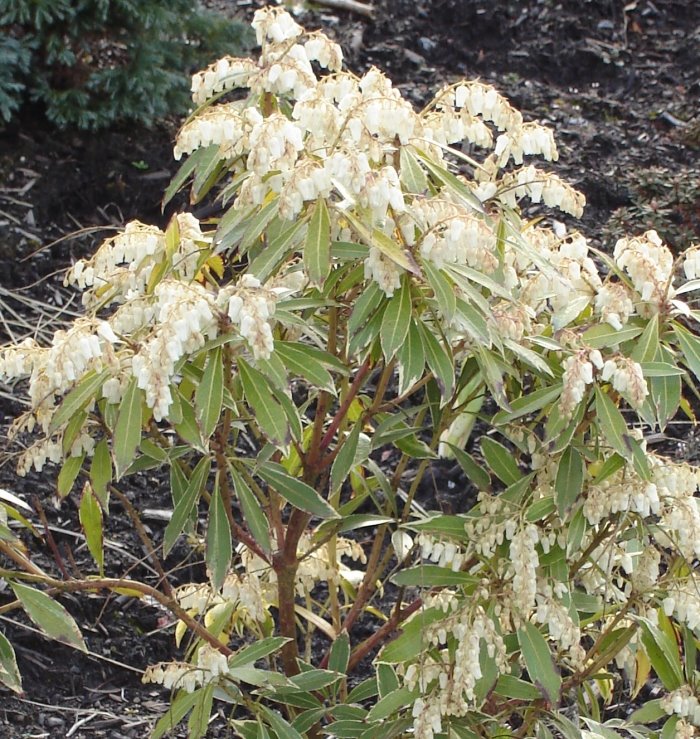
  • Variegated pieris japonicaPieris Japonica (Lily of the Valley Bush) - Many varieties to choose from, my favourite being the variegated form with creamy white flowers (see photo right).
  • Rhododendrons - There are an amazing variety to choose from, many which don't look like a "typical" rhododendron. If you have a chance to attend a rhododendron plant sale, I'd encourage you to attend.
  • Azaleas - A wide range of varieties, and many flower colours to choose from. Very showy when in bloom, often covered completely in flower.
  • Skimmia Japonica - A handsome slow-growing shrub. If a male plant is grMale skimmia japonicaown nearby, the female plant will bear bright red berries which persist all winter. The male itself (photo right), bearing upright clusters of pinkish flowers, is not only useful but attractive also.
  • Lavenders (Lavendula) - My favourite is the Spanish Lavender (lavendula stoechas), with its attractive bee-like flowers.
  • Blue oat grassBlue Oat Grass (Helictotrichon sempervirens) - The blue-grey tufts (I think of mine as little sea urchins - see photo right) may turn pale in winter, but keep their form nicely, and sway with the slightest wind.
  • California Lilacs (Ceanothus) - This family includes some 55 shrubs, many of them native to Oregon and California. The familiar fast-growing variety Ceanothus Thyrsiflorus (Blueblossom, California Lilac, or Bluebrush) is covered in a mass of blue flowers in early sChoisya ternata sundanceummer. It is a hardy and drought tolerant shrub, requiring little care.
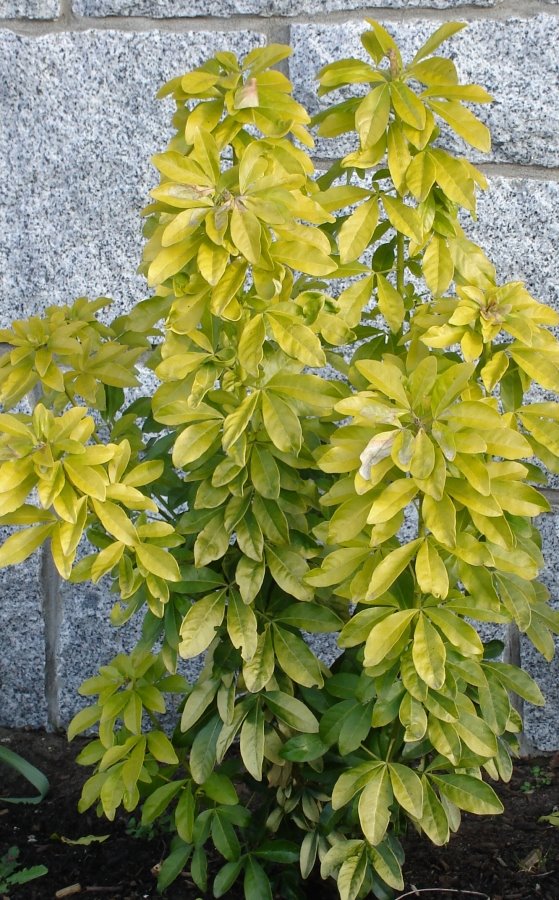
  • Choisya (Star leaf or Mexican Orange Blossom) - My little Choisya Ternata 'Sundance' (see photo right) brightens the garden all winter, with its bright yellow foliage. The white star-like blossoms in Spring and sometimes again in Autumn are just a bonus. The shrub is worthy of a spot in the garden for the foliage alone.
  • Holly (Ilex Aquifolium) - Nice berries to brighten the winter, and the variegated form has outstanding foliage too.

Tuesday, February 28, 2006

Flowering Shrubs to Hide an Ugly Fence

What do you do if you are looking at an ugly fence, the fence belongs to the neighbour, and he doesn't agree to maintain it? Ultimately, the solution may be to put up a barrier of your own.

You could start a laurel hedge or row of emerald cedars, and effectively create a living fence of your own. However, a more pleasant solution in the long run may be to create a backdrop of flowering shrubs, which may not entirely block the neighbour's fence, but will soften and brighten your property boundary, and provide year-round drama and colour. Plant smaller shrubs and perennials in front, and you have a rich, multi-textured, colourful garden border.

If space is an issue, another alternative is to set up a lattice, and introduce some colourful and quick-growing vines. There are many options, and this can be explored in another article.

In this article, we will explore some relatively fast-growing shrubs suitable to the Pacific Northwest climate, which will quickly and effectively fill an area with texture, seasonal colour and even fragrance. I would welcome you to suggest your own favourites, too.
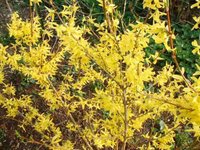
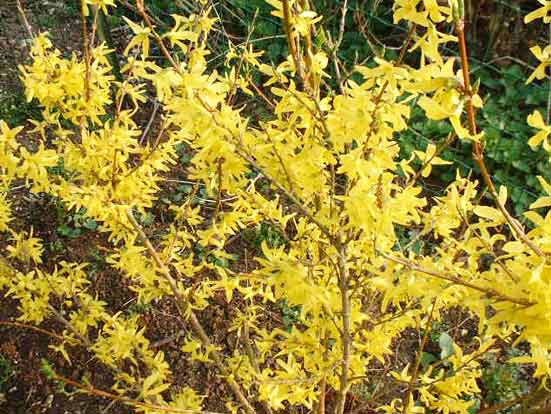
Forsythia - The cheery yellow-flowering twigs of the forsythia are one of the early signs of Spring (February), followed by pleasant chartreuse leaves which darken in the Fall. The growth habit is untidy, but there is a raw natural beauty to the arching branches, and if desired, it can be trimmed to a hedge shape.
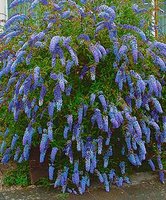
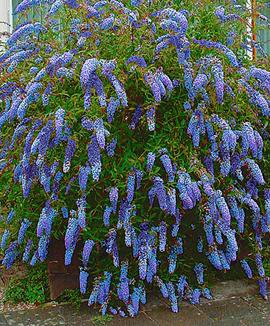
Buddleia davidii (Butterfly bush) - This non-native but incredibly hardy bush grows to an amazing size of 6' or more in its first year, with long flowerets which are irresistible to butterflies. The common one (which often grows wild along railway tracks, and can be seen in the hillsides along the highway heading to Horseshoe Bay) has purple flowers, but it can be found in all shades of white through purple, pinks through reds, and even orange. Photo on right of "Nanho Blue".
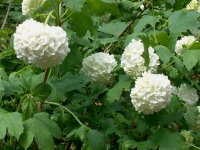
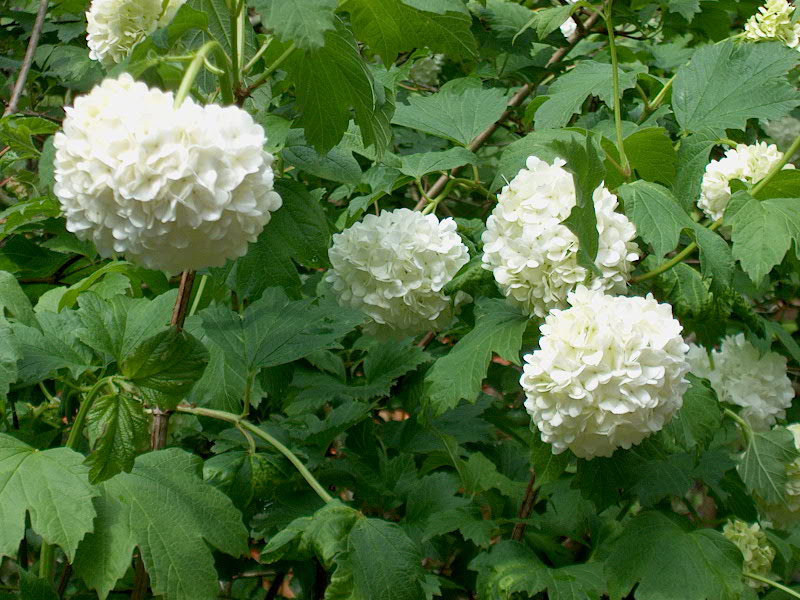
Viburnum opulus "Roseum" (European snowball) - What a delight to have snowballs in the middle of summer! This is a pretty bush when in bloom, and the snowballs make a nice cut flower, too.
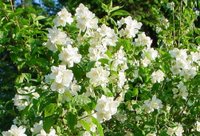
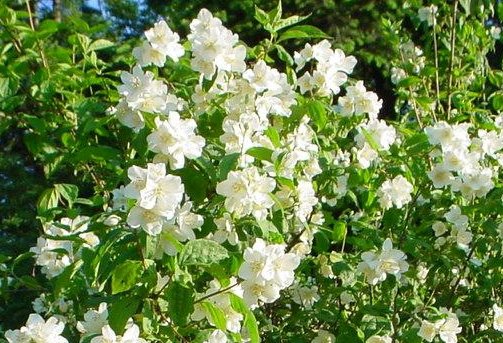
Philadelphus lewisii (Wild mock orange) - This fast-growing bush is Idaho's state flower, and bears lovely white and very fragrant blossoms.
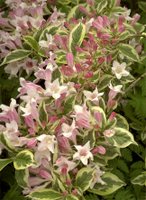
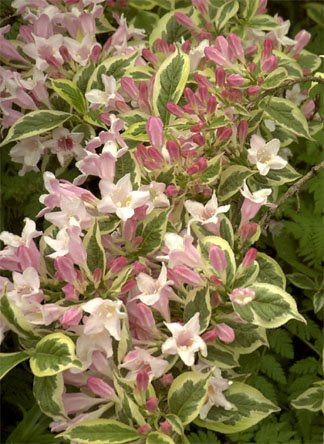
Weigela - These are beautiful, fast growing and hardy bushes, available in a variety of flower colours (white through red). When in bloom, they are completely covered in bell-like flowers, and attract hummingbirds. The branches can be left in their natural drooping shape, or trimmed to a hedge or standard. My favourite is the Weigela florida "Variegata", with its variegated leaves and pink flowers.
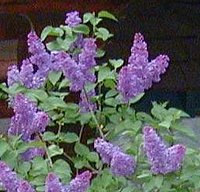
Syringa vulgaris (Lilac) - What yard could be complete without a lilac bush? There are so many options, from single flowered to double flowered, white through deep purple, pinks. The "Sensation" variety has single purple flowers outlined in white - truly sensational. Watch for fragrance, too, if you are intending to bring the flowers indoors - some varieties are more fragrant than others.

Sambucus racemosa (Red elderberry) - If you walk on the wild side, this native shrub is a nice addition, and very fast-growing. The creamy white flowers are not showy, but the red berries (which slightly poisonous to humans unless cooked) are attractive, and provide food for birds.
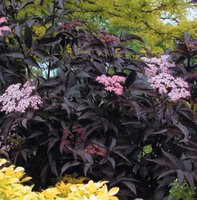
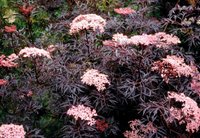
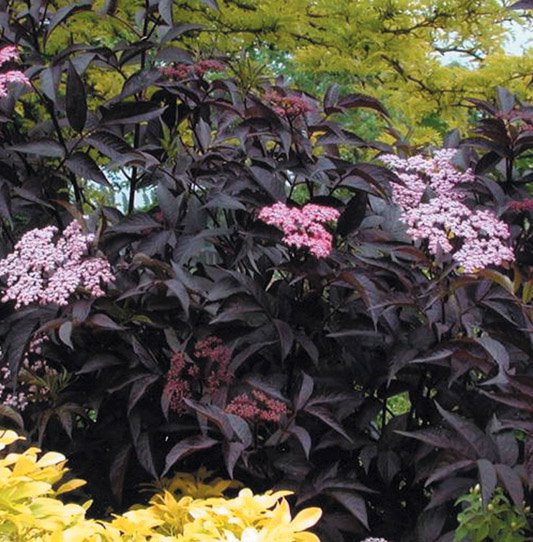
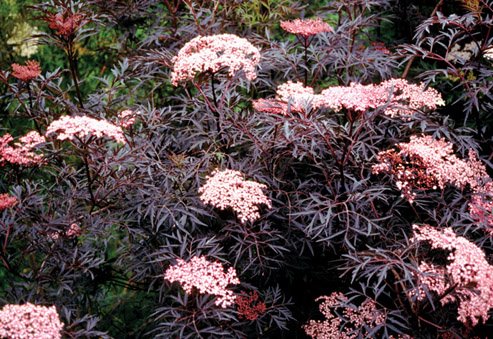
Sambucus nigra (Black elderberry) - Similar to the red elderberry, but its creamy white flowers make way to purplish black berries, also inedible unless cooked (so some potential for jams or wines, although I would question what quantities would be needed). There are two outstanding cultivars, the "Black Beauty" (photo on left) with its dark, almost black leaves, and pink flowers, and the "Black Lace" (photo on right) with its finely divided black leaves (resembling a Japanese split maple) and deep pink flowers.
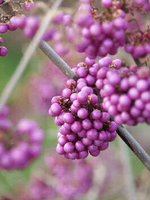
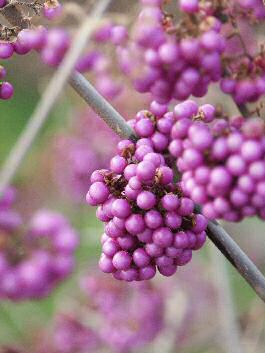
Callicarpa bodinieri (Bodinier beautyberry) - This native of China produces outstanding clusters of vivid purple berries along the stems, which look amazing when the leaves drop in Fall, leaving behind a eye-catching purple bush! The berry-laden stems are great for cut "flower" arrangements.

Corylus avellana (Common hazel) - Although not flowering as such, this nut-producing shrub will certainly bring wildlife into the yard - very popular with squirrels and Stellar's jays! The "Contorta" (Corkscrew hazel or Contorted filbert) cultivar is popular, with its bizarre curly branches.

Other shrubs which should be considered, although not as fast-growing, but are great for middle or back of the garden border, include hydrangeas, rhododendrums, various spireas, and various viburnums.
Blog Widget by LinkWithin