Although my parents live only 7 minutes away, they don't often come for dinner. So when they do, it is reason for celebration, and a good excuse to cut something from my garden to create a centerpiece. This was the one we enjoyed this weekend :
Here's a closeup:
The purple berries in the center are from my Callicarpa (beauty berry) bush. They are accompanied by bright red rose hips from my wild rose bush, and the purple leaves from a purple Cotinus (smoke bush). It seemed to be the only bush which didn't drop its leaves as I tried to cut a branch. The leaves placed around the arrangement are from my Liquidambar (sweet gum) tree. The little rings around the candleholders are not from the garden, they are a wood and silk set I received from my neighbor Helen a few years ago. They matched the fall colours well.
Showing posts with label beautyberry. Show all posts
Sunday, November 10, 2013
Saturday, October 24, 2009
Fall Colours in the Garden
In Burnaby (Vancouver) BC, the degree of fall colours depend on how much cold weather we get before the rains begin and take down the leaves. This year we have been very fortunate to see some brilliant fall colours. Sadly, recent rains have knocked the leaves out of the gorgeous yellow-to-red maples on the lawns of City Hall, and my neighbour's yellow-to-purple Katsura, neither of which I managed to photograph in time.
So the Fall colours I did photograph this year are from my garden, with the exception of this large neighbourhood oak tree which I snapped this morning. Many years the oak trees in the Vancouver area turn from green directly to brown, so it wonderful to see the reds this year.

I am fortunate to have 4 Euonymus elata (Burning bush) in my garden, and at this time of year they are glorious. This one, sheltered against my upper neighbour's fence and retaining wall, is the last to change colour. To its left is a purplish red Sweet gum tree (Liquidambar styraciflua). To its right, a climbing hydrangea, turning yellow:

This photo of the other two bushes in the back yard was taken about a week ago. The lower bush is now bare twigs with red berries (sorry no photo):

I didn't catch a photo of the burning bush at its "peak" in our front yard, but here it is, slightly faded, behind our strikingly red Japanese Split Maple. Behind it, the variegated dogwood shows a nice pink blush.

A final Burning bush photo, shows the stunning red leaves behind a Fuchsia magellanica "Aurea":

The Callicarpa bodinieri (Beauty Bush) is the most stunning in Winter, when the leaves fall, and the twigs appear purple. But this year I am enjoying the Fall colours, too:


This red Japanese maple cascades beautifully over our concrete retaining wall in the back yard:

I have started cutting back the peony stalks for the winter, but the leaves are also showing nice Autumn colours this year:

Elsewhere in the garden, yellows are showing before the browns set in, such as this Astrantia major (Masterwort):

For more photos of Autumn colours unfolding around the world, be sure to check out The Fall Color Project 2009 at The Home Garden.
So the Fall colours I did photograph this year are from my garden, with the exception of this large neighbourhood oak tree which I snapped this morning. Many years the oak trees in the Vancouver area turn from green directly to brown, so it wonderful to see the reds this year.

I am fortunate to have 4 Euonymus elata (Burning bush) in my garden, and at this time of year they are glorious. This one, sheltered against my upper neighbour's fence and retaining wall, is the last to change colour. To its left is a purplish red Sweet gum tree (Liquidambar styraciflua). To its right, a climbing hydrangea, turning yellow:

This photo of the other two bushes in the back yard was taken about a week ago. The lower bush is now bare twigs with red berries (sorry no photo):

I didn't catch a photo of the burning bush at its "peak" in our front yard, but here it is, slightly faded, behind our strikingly red Japanese Split Maple. Behind it, the variegated dogwood shows a nice pink blush.

A final Burning bush photo, shows the stunning red leaves behind a Fuchsia magellanica "Aurea":

The Callicarpa bodinieri (Beauty Bush) is the most stunning in Winter, when the leaves fall, and the twigs appear purple. But this year I am enjoying the Fall colours, too:


This red Japanese maple cascades beautifully over our concrete retaining wall in the back yard:

I have started cutting back the peony stalks for the winter, but the leaves are also showing nice Autumn colours this year:

Elsewhere in the garden, yellows are showing before the browns set in, such as this Astrantia major (Masterwort):

For more photos of Autumn colours unfolding around the world, be sure to check out The Fall Color Project 2009 at The Home Garden.
Thursday, September 28, 2006
Garden Glimpses : Late September
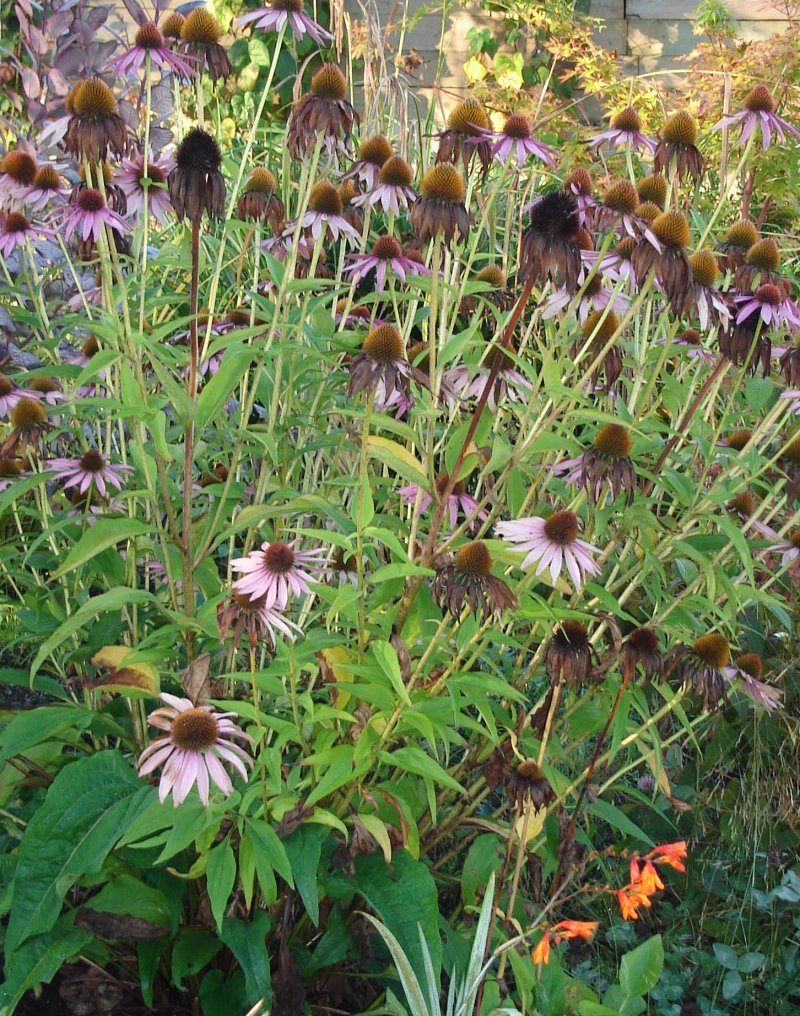
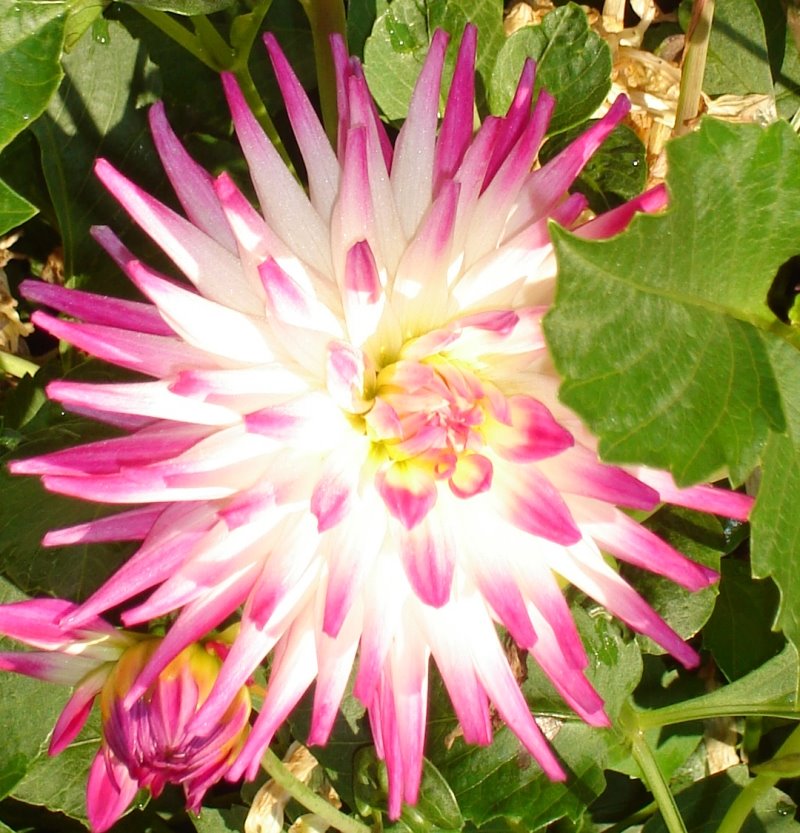
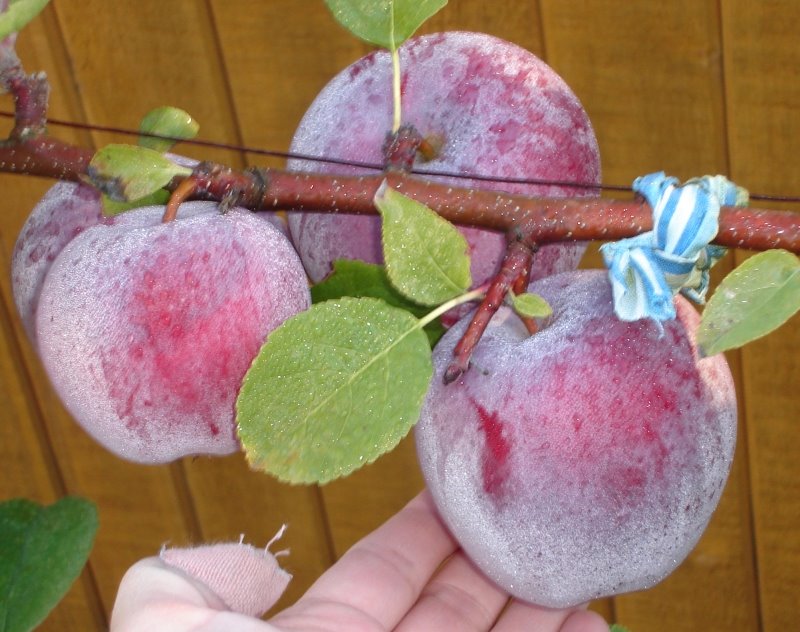
Fall is my favourite time of year. What wonderful colours to enjoy in the garden. The contrast of warm sun during the day and crisp autumn nights, and fresh dew in the morning. Fresh crunchy apples and sweet pears to enjoy. Brilliant reds, falling leaves. What a wonderful time of the year!


Labels:
beautyberry,
coneflower,
flower photos,
fruit trees,
garden glimpses
Tuesday, February 28, 2006
Flowering Shrubs to Hide an Ugly Fence
What do you do if you are looking at an ugly fence, the fence belongs to the neighbour, and he doesn't agree to maintain it? Ultimately, the solution may be to put up a barrier of your own.
You could start a laurel hedge or row of emerald cedars, and effectively create a living fence of your own. However, a more pleasant solution in the long run may be to create a backdrop of flowering shrubs, which may not entirely block the neighbour's fence, but will soften and brighten your property boundary, and provide year-round drama and colour. Plant smaller shrubs and perennials in front, and you have a rich, multi-textured, colourful garden border.
If space is an issue, another alternative is to set up a lattice, and introduce some colourful and quick-growing vines. There are many options, and this can be explored in another article.
In this article, we will explore some relatively fast-growing shrubs suitable to the Pacific Northwest climate, which will quickly and effectively fill an area with texture, seasonal colour and even fragrance. I would welcome you to suggest your own favourites, too.
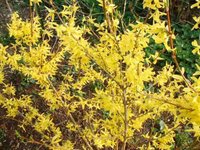
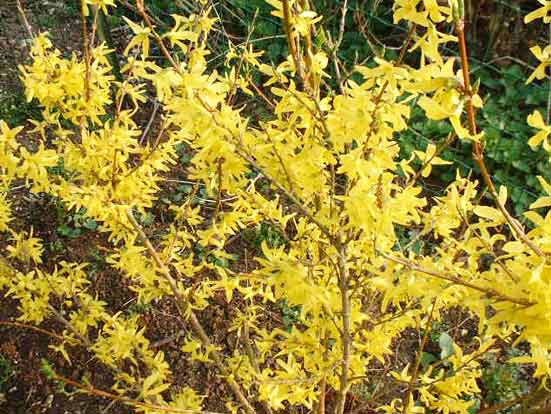
Forsythia - The cheery yellow-flowering twigs of the forsythia are one of the early signs of Spring (February), followed by pleasant chartreuse leaves which darken in the Fall. The growth habit is untidy, but there is a raw natural beauty to the arching branches, and if desired, it can be trimmed to a hedge shape.
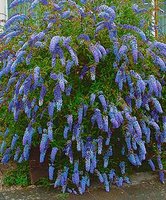
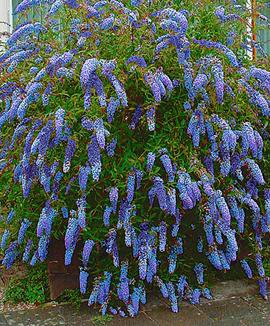
Buddleia davidii (Butterfly bush) - This non-native but incredibly hardy bush grows to an amazing size of 6' or more in its first year, with long flowerets which are irresistible to butterflies. The common one (which often grows wild along railway tracks, and can be seen in the hillsides along the highway heading to Horseshoe Bay) has purple flowers, but it can be found in all shades of white through purple, pinks through reds, and even orange. Photo on right of "Nanho Blue".
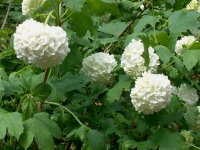
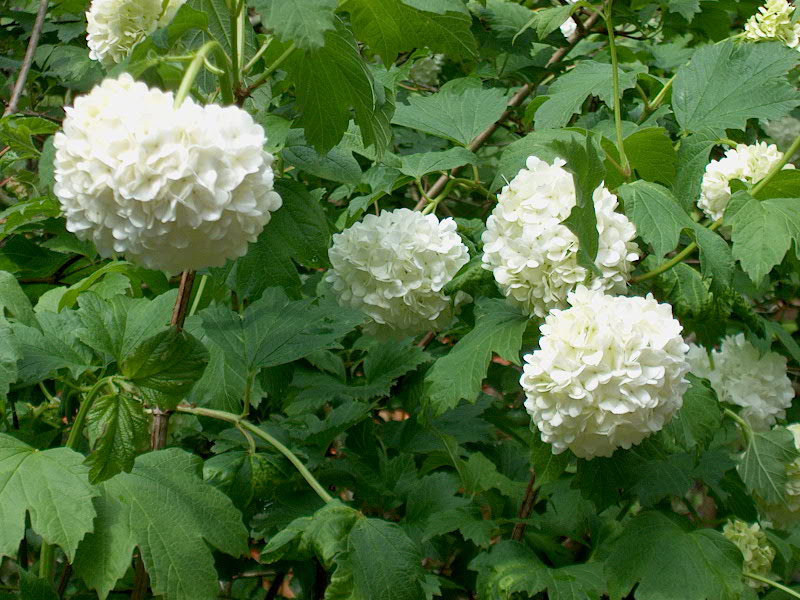
Viburnum opulus "Roseum" (European snowball) - What a delight to have snowballs in the middle of summer! This is a pretty bush when in bloom, and the snowballs make a nice cut flower, too.
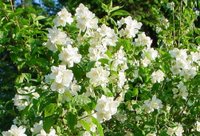
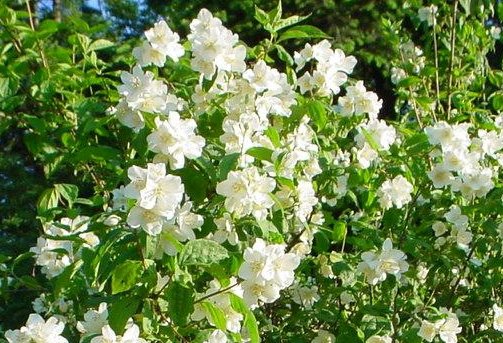
Philadelphus lewisii (Wild mock orange) - This fast-growing bush is Idaho's state flower, and bears lovely white and very fragrant blossoms.
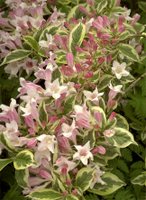
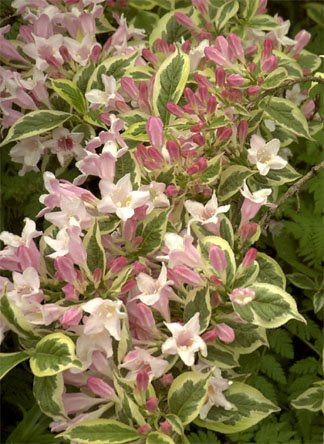
Weigela - These are beautiful, fast growing and hardy bushes, available in a variety of flower colours (white through red). When in bloom, they are completely covered in bell-like flowers, and attract hummingbirds. The branches can be left in their natural drooping shape, or trimmed to a hedge or standard. My favourite is the Weigela florida "Variegata", with its variegated leaves and pink flowers.
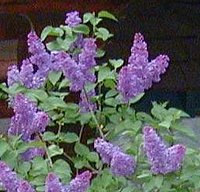
Syringa vulgaris (Lilac) - What yard could be complete without a lilac bush? There are so many options, from single flowered to double flowered, white through deep purple, pinks. The "Sensation" variety has single purple flowers outlined in white - truly sensational. Watch for fragrance, too, if you are intending to bring the flowers indoors - some varieties are more fragrant than others.
Sambucus racemosa (Red elderberry) - If you walk on the wild side, this native shrub is a nice addition, and very fast-growing. The creamy white flowers are not showy, but the red berries (which slightly poisonous to humans unless cooked) are attractive, and provide food for birds.
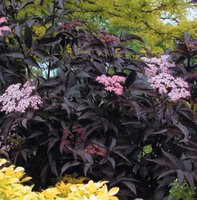
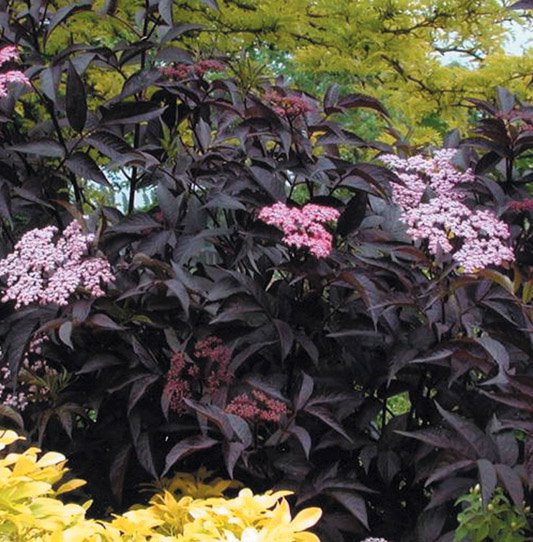
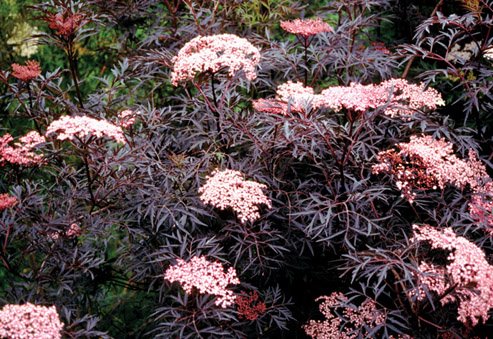
Sambucus nigra (Black elderberry) - Similar to the red elderberry, but its creamy white flowers make way to purplish black b
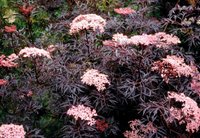
erries, also inedible unless cooked (so some potential for jams or wines, although I would question what quantities would be needed). There are two outstanding cultivars, the "Black Beauty" (photo on left) with its dark, almost black leaves, and pink flowers, and the "Black Lace" (photo on right) with its finely divided black leaves (resembling a Japanese split maple) and deep pink flowers.
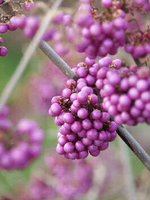
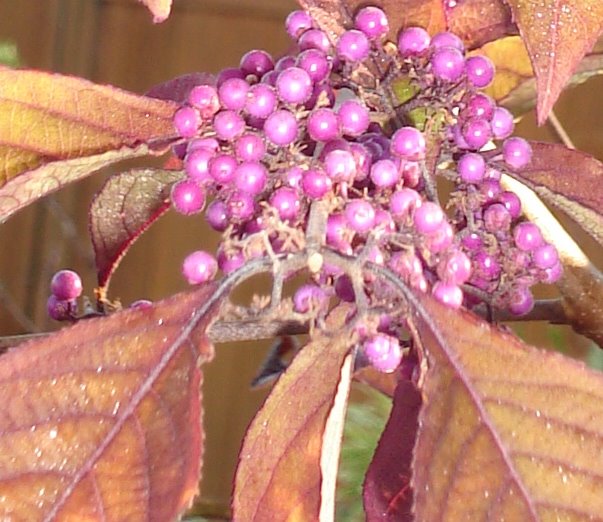
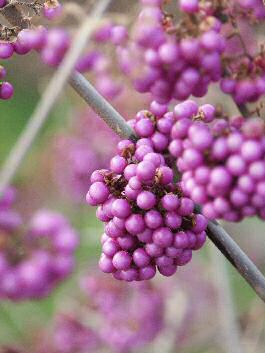
Callicarpa bodinieri (Bodinier beautyberry) - This native of China produces outstanding clusters of vivid purple berries along the stems, which look amazing when the leaves drop in Fall, leaving behind a eye-catching purple bush! The berry-laden stems are great for cut "flower" arrangements.
Corylus avellana (Common hazel) - Although not flowering as such, this nut-producing shrub will certainly bring wildlife into the yard - very popular with squirrels and Stellar's jays! The "Contorta" (Corkscrew hazel or Contorted filbert) cultivar is popular, with its bizarre curly branches.
Other shrubs which should be considered, although not as fast-growing, but are great for middle or back of the garden border, include hydrangeas, rhododendrums, various spireas, and various viburnums.
You could start a laurel hedge or row of emerald cedars, and effectively create a living fence of your own. However, a more pleasant solution in the long run may be to create a backdrop of flowering shrubs, which may not entirely block the neighbour's fence, but will soften and brighten your property boundary, and provide year-round drama and colour. Plant smaller shrubs and perennials in front, and you have a rich, multi-textured, colourful garden border.
If space is an issue, another alternative is to set up a lattice, and introduce some colourful and quick-growing vines. There are many options, and this can be explored in another article.
In this article, we will explore some relatively fast-growing shrubs suitable to the Pacific Northwest climate, which will quickly and effectively fill an area with texture, seasonal colour and even fragrance. I would welcome you to suggest your own favourites, too.

Forsythia - The cheery yellow-flowering twigs of the forsythia are one of the early signs of Spring (February), followed by pleasant chartreuse leaves which darken in the Fall. The growth habit is untidy, but there is a raw natural beauty to the arching branches, and if desired, it can be trimmed to a hedge shape.
Buddleia davidii (Butterfly bush) - This non-native but incredibly hardy bush grows to an amazing size of 6' or more in its first year, with long flowerets which are irresistible to butterflies. The common one (which often grows wild along railway tracks, and can be seen in the hillsides along the highway heading to Horseshoe Bay) has purple flowers, but it can be found in all shades of white through purple, pinks through reds, and even orange. Photo on right of "Nanho Blue".
Viburnum opulus "Roseum" (European snowball) - What a delight to have snowballs in the middle of summer! This is a pretty bush when in bloom, and the snowballs make a nice cut flower, too.
Philadelphus lewisii (Wild mock orange) - This fast-growing bush is Idaho's state flower, and bears lovely white and very fragrant blossoms.
Weigela - These are beautiful, fast growing and hardy bushes, available in a variety of flower colours (white through red). When in bloom, they are completely covered in bell-like flowers, and attract hummingbirds. The branches can be left in their natural drooping shape, or trimmed to a hedge or standard. My favourite is the Weigela florida "Variegata", with its variegated leaves and pink flowers.
Syringa vulgaris (Lilac) - What yard could be complete without a lilac bush? There are so many options, from single flowered to double flowered, white through deep purple, pinks. The "Sensation" variety has single purple flowers outlined in white - truly sensational. Watch for fragrance, too, if you are intending to bring the flowers indoors - some varieties are more fragrant than others.
Sambucus racemosa (Red elderberry) - If you walk on the wild side, this native shrub is a nice addition, and very fast-growing. The creamy white flowers are not showy, but the red berries (which slightly poisonous to humans unless cooked) are attractive, and provide food for birds.
Sambucus nigra (Black elderberry) - Similar to the red elderberry, but its creamy white flowers make way to purplish black b
erries, also inedible unless cooked (so some potential for jams or wines, although I would question what quantities would be needed). There are two outstanding cultivars, the "Black Beauty" (photo on left) with its dark, almost black leaves, and pink flowers, and the "Black Lace" (photo on right) with its finely divided black leaves (resembling a Japanese split maple) and deep pink flowers.
Callicarpa bodinieri (Bodinier beautyberry) - This native of China produces outstanding clusters of vivid purple berries along the stems, which look amazing when the leaves drop in Fall, leaving behind a eye-catching purple bush! The berry-laden stems are great for cut "flower" arrangements.
Corylus avellana (Common hazel) - Although not flowering as such, this nut-producing shrub will certainly bring wildlife into the yard - very popular with squirrels and Stellar's jays! The "Contorta" (Corkscrew hazel or Contorted filbert) cultivar is popular, with its bizarre curly branches.
Other shrubs which should be considered, although not as fast-growing, but are great for middle or back of the garden border, include hydrangeas, rhododendrums, various spireas, and various viburnums.
Labels:
beautyberry,
butterfly bush,
flower photos,
shrubs
Subscribe to:
Comments (Atom)