Showing posts with label butterfly bush. Show all posts

Monday, July 20, 2009

Garden Glimpses : Mid-July 2009

A couple of blogs I've visited recently are celebrating anniversaries... Which got me to looking back to when I started, which was 19 Jan 2006. So yesterday was half way to my 5 year anniversary. I guess that's some sort of half-anniversary...

When I first started this blog, I had all sorts of ambitions of providing plant information, tips, maybe even plant advice.... But it seems that visitors have appreciated my garden photos more than any witty or intelligent information which I had hoped to provide.

One of my favourite "series" has become my Garden Glimpses, where I post photos of my garden at specific times in the year. It is fun to go back and compare year over year, so I had created (mostly for myself, but feel free to check it out in the left margin of my blog) a keyword "garden glimpses".

So here goes for another (as always, click the photo for a slightly larger view)...

I love this handsome daylily Kwanzo / Kwanso I received from my father-in-law. It has a large triple bloom, and spreads somewhat aggressively (sending out fans some 6" or 12" from the mother plant), so is great for filling an area and for sharing:
Daylily Kwanzo
Here it is again, in front of shaggy red Monarda:
Daylily Kwanso
I don't know if I have the name of this maroon daylily, but I like the colour:
Maroon daylily
I was surprised to see this Campanula glomerata "alba" finally blooming this year, but long after its purple counterparts had faded away. I had bought and planted it last year, and thought I lost it over the winter, and the Euonymus alatus (Burning bush) had grown over it (wow, that is a fast-growing shrub!!), so that the bloom ended up poking out from under the bush upside-down:
White Globe Campanula
This borage plant sprouted up between the crocosmia I dug & replanted earlier this year, perhaps delivered by birds, or the seed was in the soil (although I haven't grown it for some while). The star-shaped flower is edible (just pull off the hard dark bit), and pretty as a garnish for potato salads or fruit salads or even cakes... So I left it there, just in case (wishful thinking on my part). I was trying to catch the bee in flight, which I did:
Borage with bee
I planted this young Buddleia davidii (Butterfly bush) to block some of the view of my lower neighbour's house. I was amazed at how strong and vigourous it grew this year. These are the green flower spikes, before they bloom purple. A dragonfly landing on the bush had prompted me to pull out the camera, but sadly he didn't wait for the photo:
Butterfly bush

Saturday, April 18, 2009

Crocosmia Cleanup

Today was a perfect gardening day, mostly sunny, calm, and with 90% probability of precipitation tomorrow. Ideal weather for transplanting and dividing perennials. So while my husband and kids went to visit their grandma, I got their approval to stay home and spend the day gardening.

Here is a diary of my gardening day:

11:00 AM - Into the Garden
I finally got the family out the door, and slipped into my gardening clogs and gardening clothes (ones which will end up in the laundry for sure!), and started out. First I did some light weeding in the herb garden, took a few "before" photos, and got myself in the mood for the big project.

11:30 AM - Tackled the Crocosmia Patch
The crocosmia patch, which started as a few small plants maybe 4 years ago, has become a large patch, a couple of feet across, blooming handsomely in front of my buddleia each year (see 2008 photo - 3rd photo in the posting).

In the last couple of years, though, a nasty creeping grass poked its way up through the centre of the patch, and my attempts to pull it out between the blades/leaves have failed. I had this project on my mental list already last year, but never got to it. So this Spring, my patch looked like a hairy mess (as always, click any photo for a slighly larger view):
Early spring
Crocosmia in early spring with nasty grass
So I decided to dig up the whole thing, separate out the crocosmia corms, and then replant them. Little did I know how big of a project this would be. When I started digging, I found that the patch went down about 6" to 8" deep, and was a big mess of tangled, connected corms, shooting out sideways (which is why the patch spreads so nicely) but also vertically, forming little chains. Reading in Wikipedia now (see Crocosmia article), it indicates that the corms are able to dig themselves deeper in the ground (wow! weird!), so that the youngest corms are on top, the oldest further down. What an amazing survival strategy! And good reason to think about where you want to plant crocosmia, since it may be a bit difficult to remove later!

1:00PM - Break for Lunch
After 1.5 hr of heavy shoveling, cutting, tugging and pulling, I was more than half way through the patch, but quite exhausted. So I took a break for lunch, and then collapsed on the sofa for an hour.

2:30PM - Back to the Crocosmia Project
After my break, I want back to the task with renewed vigour. Even after cleaning the soil off the crocosmia corms, and pulling off much of the roots too (the fine grass roots looked very much like the crocosmia roots, so I wanted to be as sure as I could that I've removed those grasses), I ended up with an amazing pile of crocosmia. Probably 25 to 30 pounds worth! If they were edible, I'd be pretty happy!
Pile of crocosmia corms
I decided that instead of just replanting a patch, I would plant a ring around the base of the buddleia, and then about 12" along the edge of the grass. In between, I planted some daylilies which I salvaged earlier this week. I took the opportunity to also remove some of the grass, and expand the garden bed by a few inches also. I also removed a lavender which was dead. (This cold winter killed off a few lavender, one rosemary, and possibly a few other plants and small shrubs).

I ran into lots of roots of the buddleia, which I tried to work around, or push back into the soil. So I hope he will forgive me, and do well this year. The hummingbirds sure do enjoy his flowers. I think the garden looks pretty good now, and I think it should fill in quite nicely:
Newly replanted crocosmia around buddleia
5:30PM - Cleanup and Wind Down
After the 3 hours of tough gardening work (5 hours total today!) I was beyond exhausted. But I managed to put away the wheelbarrow and buckets, and tuck the extra crocosmia away in a shady spot near the house (I must have some 10 or 15 pounds to give away!), and make my way back to the house. On the way, I overseeded the lawn in spots where it was too bare (it was recently dethatched, removing a significant amount of moss).

6PM - Dinner and Blogging
I managed to microwave a 5 minute Red Curry Chicken frozen dinner, but it was quite unimpressive. The taste was fairly good, but the chicken was rubbery. My body is aching all over, especially my feet. My plantar fasciitis was diagnosed just recently, but I guess I've been suffering for about 6 months now. I finally sought medical help, and am in physio sessions twice a week, to try to resolve this situation. It seems to be helping, but it may be some time to be entirely pain free, if that is even a possibility.

I am very thankful for my chance today, to spend the time in the garden. There are few other activities which I would enjoy more.

Monday, March 30, 2009

Spring is Finally Starting to Spring

I think Spring has finally Sprung. Or at least that's what my allergies are telling me. ;-) Actually, this year, due to the unusually cold winter, my allergies have only started about a week ago. Most years I am already suffering in February, and it goes until April. So hopefully it will be a shorter allergy season for me.

Today I went looking for some signs of Spring. Like this lone crocus (the only one not eaten by the squirrels I guess) poking through the decaying Gunnera leaf (as always, click the photo for a slightly larger image):
Lone crocus in Spring
This past winter hit so cold and so suddenly, that I didn't fold the Gunnera leaves back over the crown to protect it. So hopefully the snow insulated and protected it. We'll find out.

I love this mini daffodils, they are a cheery sign of Spring (the tiny red sprouts nearby are from the Geranium "Victor Reiter" (cranesbill):
Mini daffodils
This time of year, my metal frogs are visible behind the bare twisted vines of the climbing hydrangea. Wow, those little guys have held up to a number of years of weather now, and look as delightful as when I bought them many years ago, in a little shop in Gastown, Vancouver, BC. If I ever see them again (they had lizards to choose from also), I will buy some more.
Metal frogs in climbing hydrangea
The fairy house held up surprisingly well to the winter, it appear to be undamaged from the load of the snow and pelting of the rain this winter. So I must have done something right when I built it (click "fairies" on the left for postings on the construction of the fairy house, and clearing and planting of the fairy garden).
Fairy house in Spring
Although not particularly attractive to me, the flowers of the Petasites Frigidus has emerged. It will be followed by very attractive leaves. For more photos of this handsome plant, click "petasites frigidus" at the left, or click here (note also those same frogs in the climbing hydrangea).
Petasites Frigidus flower
Some of the fruit trees are visibly budding. Particularly the cherry trees, such as this Lapin (dark) cherry:
Lapin cherry buds
...and the Rainier (golden) cherry:
Rainier cherry buds
This is the time of year for major garden cleanup, and fortunately the past couple of weekends have cooperated with good weather. I have pulled and cut many bags and wheelbarrows full of last year's stalks and rotting leaves, to make way for the new plant growth. I keep thinking I'll take some "before and after" photos, but forget to take the "before" ones, or move too randomly from place to place, and can't decide what I'm going to tackle first. So here's one of my "after" photos, after I cleared a lot of tall grass and weeds around the base of some of my missouri currant (Ribes odoratum) bushes (the clumps of dead-looking grass to the left will soon be an attractive green and white striped ribbon grass).
Ribes odoratum spring cleanup
This part of my "hummingbird garden", with the Buddleia davidii (butterfly bush), Crocosmia, and red Monarda (growing all around the white stick), is substantially clearer, but still needs more cleanup. I have a nasty grass which has grown and tangled itself between the crocosmia shoots (that hairy mess in front of the buddleia), so one day I need to dig up the entire clump, sort it all out, and replant the crocosmia. I have a feeling it may not be this year. We'll see.
Buddleia, crocosmia and monarda in my hummingbird garden
All the best for Spring to everyone! Go out and enjoy the garden whenever you can.

Monday, August 18, 2008

Garden Related Glimpses : mid-Aug 2008

Here goes with some more garden photos, and other miscellaneous photos from August. Instead of my usual close-ups, here are a few wider views of my garden:
Garden photo
Here is our fairy house, with blooming lilies towering above it:
Fairy house
Here is my hummingbird corner, with a lush butterfly bush cascading over a clump of crocosmia, and a set of red monarda falling to the right:
Hummingbird corner
Here is one of challenges I regularly deal with, blackberry vines reaching over the fence into my garden (those nasty things seem to grow one foot or more per day!). The large purple plant on the right is a purple sage. To the left of it, the straggly flower stalks of Stachys byzantina (Lamb's ear). I don't much like the look of the flowers, but I leave them for the bees (especially the little mason bees) which are all over them. To the far left, our red currant bush, which bore more than a 4L (1 gallon) bucket of berries this year:
Invading blackberry vines
I was very pleased to gather a large harvest of lavender flowers from my neighbour, before her landscaper removed the large plants this year. While I had the lavender drying on a number of cookie sheets and other trays on the kitchen island, the fragrance throughout the house was amazing:
Lavender drying
I also made a batch of lavender jelly. I was very pleased with the natural colour of it (yes, just lavender, certo & white sugar, no other additives or preservatives). Oh, and did I mention that it tasted good, too? My 9 year old daughter has been asking for it on toast for breakfast ever since.
Lavender jelly
While I'm posting photos, here is one of Alouette Lake, BC, from above. My husband and I discovered this viewpoint while off-roading a few weeks ago:
Aloutte Lake from above
Yesterday (Sunday) we took the kids canoeing from Barnet Beach across and up into Indian Arm, to escape the heat. It was indeed much cooler there, and ended up being a beautiful day to canoe, with only the occasional drops of rain. We spotted this harbour seal with her pup on the shore, mainly because a pair of kayakers ahead of us had already stopped to watch. Otherwise we may have missed them on the rocks, since they were quite well camoflauged:
Harbour seal with pup in Indian Arm
Here is a closeup from the same photo, you can better see the mother seal with her pup (he was not interested in looking at us, so that is his back end, you can see the flipper on the right side):
Seal with pup closeup

Saturday, August 09, 2008

Swallowtail Butterfly Photos

With my new camera this year that actually allows me to take some decent close-up photos, I've been fascinated with capturing images of the bumblebees which I adore. Here are a few of my recent favs (as always, click on the image for a larger view):
Bumblebee closeup
The bees love the globe thistle (Echinops banaticus) even more than I do (which is a lot):
Bumblebees on globe thistle flower
A couple of days ago, a swallowtail butterly flitted into the garden, and didn't seem to mind me chasing him around with the camera as he visited my many plantings of Echinacea purpurea (Purple coneflower):
Swallowtail butterfly
Swallowtail on Purple Coneflower
Swallowtail butterfly on Echinacea purpurea
Swallowtail butterfly
True to its name, the Buddleia davidii (Butterfly bush) is attractive to the Swallowtail butterfly (although the smaller white Cabbage butterfly doesn't seem to give it much attention):
Swallowtail on butterfly bush

Tuesday, August 07, 2007

Garden Glimpses : Early August 2007

We took advantage of the great weather on the weekend, to visit Bunsen Lake. We were very impressed by our kids, 8 and 6, who very cheerfully walked the trails for 1 hr 15 min to get to the other side of the lake. Then, the 2 hr 15 min of the more gruelling (or perhaps it just felt more challenging since we were already tired on the return journey) longer trail on the other side of the lake. Afterwards, they even had enough energy to go wading in the cold lake!

The barn swallows had several nests on the outside of the building which contains the washrooms. It was fun to see the little heads and open beaks pop up each time a parent approached the nest. One nest contained 4 chicks which looked nearly ready to leave the nest (click any of the photos for a slightly closer view):
barn swallow nestlings
I waited for quite a while, trying to snap a shot of them with their mouths open, but the mom (or dad, I guess) darted in and out so quickly, I missed a number of times. Finally, I got the shot I wanted:
barn swallow chicks with mouths wide open
On a similar note, almost every time I look, there are 2 or 3, sometimes even 4, hummingbirds darting around our garden, and up into the maple and alder trees beside our property (in the ravine). I have been trying to catch them on camera, but this is the best I've done so far:
humming bird
Not National Geographic, but any means! I've done a bit better, with the video camera, because that at least picks up the motion, and I got a good close-up of one sitting on the top of my small cherry tree.

Here is a nice shot of the globe thistle with bees in it:
globe thistle with bees
I find it interesting, that each flower has its own following of bees. The globe thistle attracts the smaller honey bees. Many of the others are a magnet for the big fuzzy bumblebees. The lamb's ear was a favourite of what I believe was mason bees, as well as bumblebees.
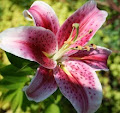
stargazer lily
Can you smell the fragrance of this stargazer? They are so sweet-smelling. I am pleased to have a number of them blooming in the garden at the moment, and catch a whiff of them as I walk through the yard. I have a fond association with the stargazer, since it was my wedding flower. This is a good time of year to buy them in the grocery stores, enjoy the fragrance indoors, then when they are finished flowering, plant them out to enjoy next year. It is about the same price as buying the bulb at the garden center, so this seems a better way to go.
beautiful lilies
I don't remember if these lilies are fragrant, but I love the rich orange colour, and the freckles on them. My friend Lily gave them to me, the bulbs are apparently a Taiwanese delicacy. But I think they are much too beautiful to consider eating.

I learned something interesting the other day. A few weeks ago, I had deadheaded a number of my hardy geraniums, mainly since I already have enough seedlings to deal with, and the seedheads can look quite messy. On one geranium, I trimmed most of the plant, but was interrupted before I finished completely. Now, weeks later, the part I had trimmed (front), looks green and refreshed, and has even started to flower again, whereas the part I had left in seed (at back), appears yellow and faded (Yes, those are really two parts of the same plant!!):
dramatic effect of deadheading on a geranium
Finally, it is only the first week of August, which feels like only half way through the summer. But the Virginia Creeper is telling a different story, it has already started to turn red. (It turns a brilliant red in the Fall before losing its leaves for the Winter.)
Virginia creeper
Could we be so close to Fall? I guess it is only 4 weeks left before the start of school! Much too soon!

Tuesday, February 28, 2006

Flowering Shrubs to Hide an Ugly Fence

What do you do if you are looking at an ugly fence, the fence belongs to the neighbour, and he doesn't agree to maintain it? Ultimately, the solution may be to put up a barrier of your own.

You could start a laurel hedge or row of emerald cedars, and effectively create a living fence of your own. However, a more pleasant solution in the long run may be to create a backdrop of flowering shrubs, which may not entirely block the neighbour's fence, but will soften and brighten your property boundary, and provide year-round drama and colour. Plant smaller shrubs and perennials in front, and you have a rich, multi-textured, colourful garden border.

If space is an issue, another alternative is to set up a lattice, and introduce some colourful and quick-growing vines. There are many options, and this can be explored in another article.

In this article, we will explore some relatively fast-growing shrubs suitable to the Pacific Northwest climate, which will quickly and effectively fill an area with texture, seasonal colour and even fragrance. I would welcome you to suggest your own favourites, too.
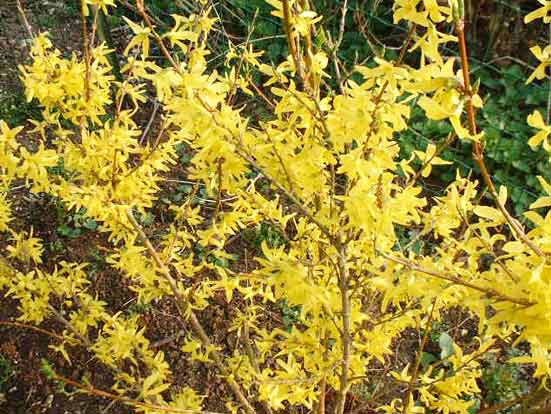
Forsythia - The cheery yellow-flowering twigs of the forsythia are one of the early signs of Spring (February), followed by pleasant chartreuse leaves which darken in the Fall. The growth habit is untidy, but there is a raw natural beauty to the arching branches, and if desired, it can be trimmed to a hedge shape.
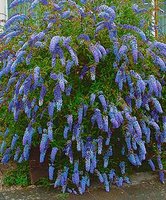
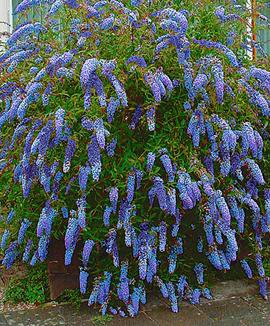
Buddleia davidii (Butterfly bush) - This non-native but incredibly hardy bush grows to an amazing size of 6' or more in its first year, with long flowerets which are irresistible to butterflies. The common one (which often grows wild along railway tracks, and can be seen in the hillsides along the highway heading to Horseshoe Bay) has purple flowers, but it can be found in all shades of white through purple, pinks through reds, and even orange. Photo on right of "Nanho Blue".
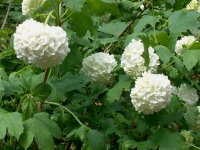
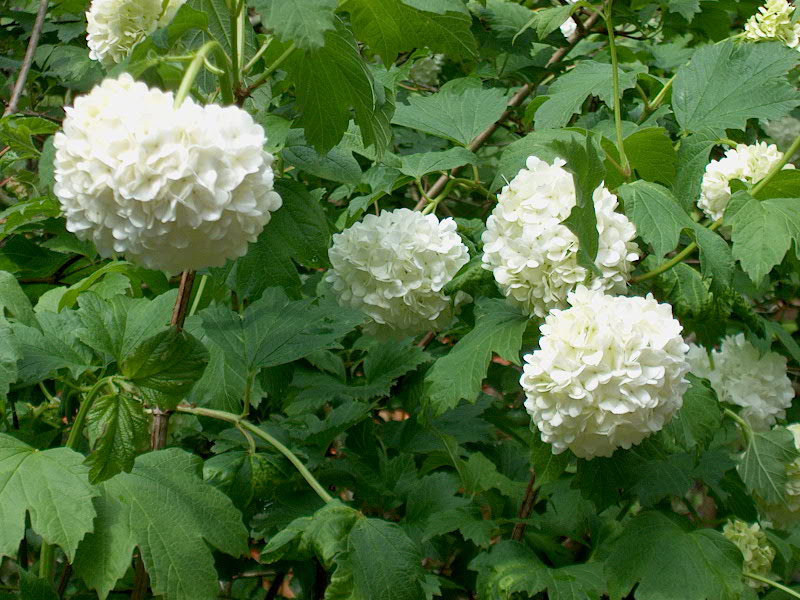
Viburnum opulus "Roseum" (European snowball) - What a delight to have snowballs in the middle of summer! This is a pretty bush when in bloom, and the snowballs make a nice cut flower, too.
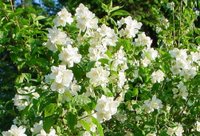
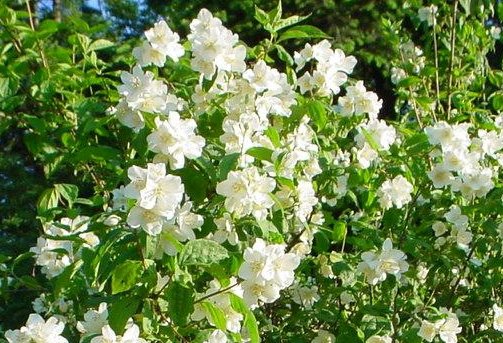
Philadelphus lewisii (Wild mock orange) - This fast-growing bush is Idaho's state flower, and bears lovely white and very fragrant blossoms.
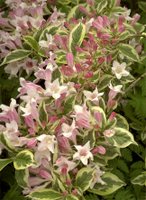
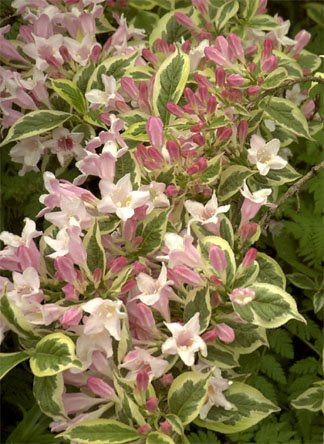
Weigela - These are beautiful, fast growing and hardy bushes, available in a variety of flower colours (white through red). When in bloom, they are completely covered in bell-like flowers, and attract hummingbirds. The branches can be left in their natural drooping shape, or trimmed to a hedge or standard. My favourite is the Weigela florida "Variegata", with its variegated leaves and pink flowers.
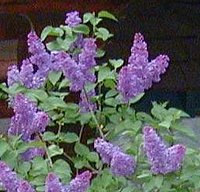
Syringa vulgaris (Lilac) - What yard could be complete without a lilac bush? There are so many options, from single flowered to double flowered, white through deep purple, pinks. The "Sensation" variety has single purple flowers outlined in white - truly sensational. Watch for fragrance, too, if you are intending to bring the flowers indoors - some varieties are more fragrant than others.

Sambucus racemosa (Red elderberry) - If you walk on the wild side, this native shrub is a nice addition, and very fast-growing. The creamy white flowers are not showy, but the red berries (which slightly poisonous to humans unless cooked) are attractive, and provide food for birds.
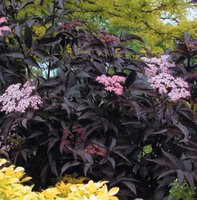
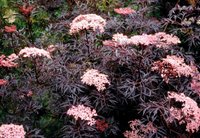
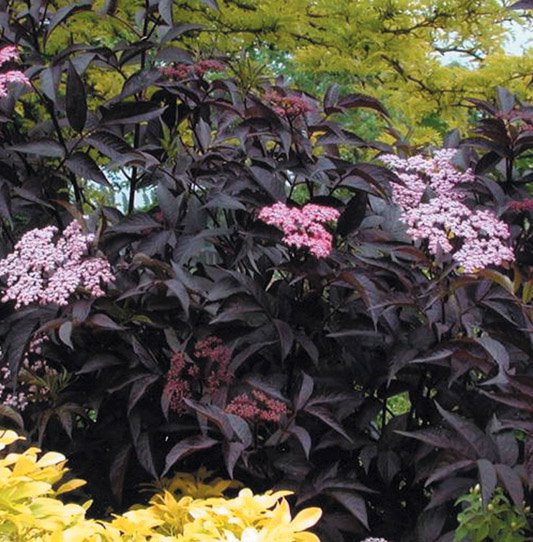
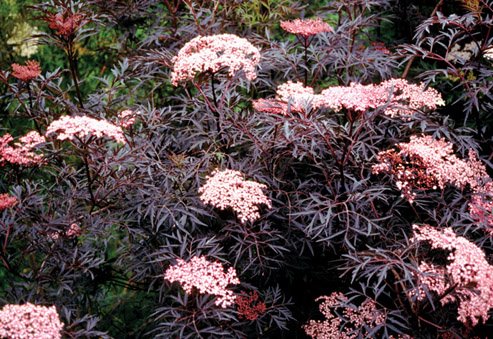
Sambucus nigra (Black elderberry) - Similar to the red elderberry, but its creamy white flowers make way to purplish black berries, also inedible unless cooked (so some potential for jams or wines, although I would question what quantities would be needed). There are two outstanding cultivars, the "Black Beauty" (photo on left) with its dark, almost black leaves, and pink flowers, and the "Black Lace" (photo on right) with its finely divided black leaves (resembling a Japanese split maple) and deep pink flowers.
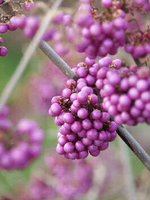
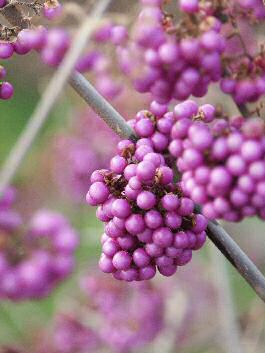
Callicarpa bodinieri (Bodinier beautyberry) - This native of China produces outstanding clusters of vivid purple berries along the stems, which look amazing when the leaves drop in Fall, leaving behind a eye-catching purple bush! The berry-laden stems are great for cut "flower" arrangements.

Corylus avellana (Common hazel) - Although not flowering as such, this nut-producing shrub will certainly bring wildlife into the yard - very popular with squirrels and Stellar's jays! The "Contorta" (Corkscrew hazel or Contorted filbert) cultivar is popular, with its bizarre curly branches.

Other shrubs which should be considered, although not as fast-growing, but are great for middle or back of the garden border, include hydrangeas, rhododendrums, various spireas, and various viburnums.
Blog Widget by LinkWithin